Dear Passengers Passengers
Passenger selection, moods, unruly behavior, and service mechanics in Dear Passengers — how travelers affect payouts, cabin chaos, and co-op survival before landing.
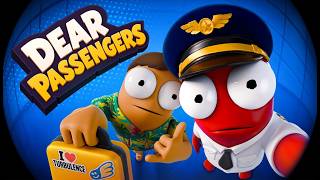
Passengers as a Core Risk-Reward System
Passengers in Dear Passengers are not background scenery — they are active hazards with price tags. Before every flight, your crew chooses which travelers to accept alongside cargo contracts. Higher-paying passengers typically bring higher maintenance costs: louder complaints, faster mood decay, special demands, and willingness to ignore seatbelt signs when turbulence hits. FLEXUS frames this as the world's worst airline for a reason; passenger safety barely makes the Steam feature list, but passenger profit absolutely does.
The selection screen is your first co-op negotiation. One player may want the lucrative VIP who pays triple; another remembers the last time a VIP trashed the galley during a bird strike. Unlike sterile flight sims where travelers are counted as anonymous numbers, Dear Passengers gives them physics, personalities, and the ability to ruin your week in thirty seconds of ragdoll pandemonium. Understanding passenger types helps crews align on risk before anyone touches the throttle.
Service quality loops back into payouts and chaos. Fed, calm passengers are less likely to sprint down aisles during emergencies. Neglected travelers become force multipliers for every other problem — a fire is worse when someone blocks the extinguisher while demanding peanuts. The cabin crew role exists largely because passengers refuse to behave themselves.
Passenger Moods and Demands
Preview footage and press coverage describe mood meters that drift based on service speed, comfort, and external events. Delays, rough air, and nearby panic all appear to drain patience. Some passengers want basic meals; others want attention every few minutes. Meeting demands stabilizes mood temporarily, but overcommitting during crises is a classic failure state. Smart crews triage: secure the cabin first, apologize second.
Unruly passengers escalate through visible stages — annoyance, shouting, physical interference, and full cabin threats. Intervention options hinted in trailers range from calming dialogue to physical restraint and, in extreme comedy beats, ejecting troublemakers mid-flight. That last option may be morally questionable in real aviation, but Dear Passengers is parody first. Our dedicated unruly passenger guide walks through escalation control in more detail.
Group dynamics matter in co-op. Splitting cabin coverage so one player watches high-risk rows while another handles the galley prevents mood cascades. Use proximity voice chat to call out which passenger is about to snap before the pilot hears only screaming behind them.
- Pre-flight selection sets payout potential and difficulty
- Mood meters react to service, delays, and turbulence
- Special demands reward attention but consume crew time
- Unruly stages escalate from complaints to physical threats
- Restraint and removal options exist for extreme cases
- Neglected passengers amplify other emergencies
Physics, Turbulence, and Cabin Safety
Dear Passengers applies ragdoll physics to passengers the same way it does to crew and cargo. Unbelted travelers during turbulence become projectiles that collide with seats, service carts, and other players. Seatbelt announcements are not flavor text — they are damage prevention. Crew members who force passengers into seats before rough segments save themselves repair work later.
Medical and panic events can spread between rows. One screaming passenger appears to trigger others, mirroring real crowd behavior compressed into comedy timing. Fire, decompression, and pirate boarding — detailed on our events page — all interact with passenger AI. A cabin full of panicked bodies blocking an exit turns a manageable emergency into a total loss.
Landing phases raise stakes again. Passengers must be seated and aisles clear, but late-flight mood crashes can cause last-second sprinting. Coordinate with the pilot so approach timing matches cabin readiness. Nothing hurts more than a perfect runway alignment ruined by one traveler charging the cockpit door for extra pretzels.
Strategic Passenger Selection for Co-op Crews
New crews should favor balanced manifests: enough revenue to upgrade supplies without accepting every high-risk traveler on the board. Treat passenger picks like a roster for a heist — know everyone's baggage, literal and figurative. Use the cargo and passenger guide when balancing freight alongside people.
Veteran groups chasing leaderboard payouts or stream highlights can stack difficult passengers intentionally. That strategy requires practiced role assignments, fast mood management, and agreement on when ejection is acceptable. Fail one step and the flight becomes content gold but progress zero.
Solo players face the same systems with AI help unconfirmed pre-release. Expect to bounce between cockpit and cabin while passengers demand service during engine fires. Whether AI assistants exist or not, passenger logic will remain the emotional engine of Dear Passengers — the reason your friendslop stories are about people, not just planes.
Frequently Asked Questions
Can you throw passengers off the plane in Dear Passengers?
Trailers and coverage strongly suggest extreme removal options, including ejecting unruly travelers mid-flight. Treat this as a high-risk comic mechanic until FLEXUS confirms final balance at launch.
Do passengers affect payout?
Yes. Passenger selection before takeoff appears to set base contract value. In-flight service quality likely influences bonuses or penalties, though exact formulas are unreleased.
How many passengers can you carry?
FLEXUS has not published hard capacity numbers. Aircraft size and contract type likely determine manifest limits. Watch for updates closer to the 2026 Steam launch.
Are there VIP or special passenger types?
Preview material shows varied traveler profiles with different pay and patience levels. Expect VIPs, anxious flyers, troublemakers, and ordinary tourists mixed across contracts.
Do seatbelts matter for passengers?
Absolutely in a physics-driven cabin. Unsecured passengers during turbulence become hazards to themselves and crew. Belt passengers before rough weather whenever possible.